


Distance
21.1kmTime
30minsEurope's most ancient constantly inhabited city
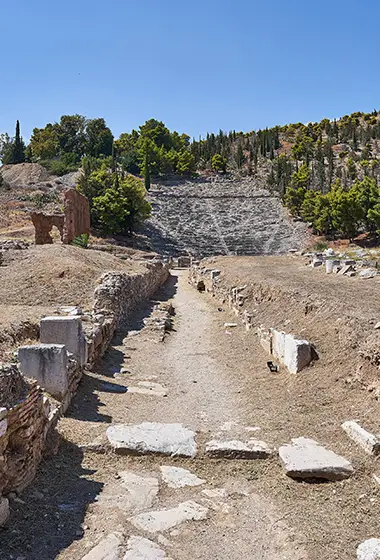
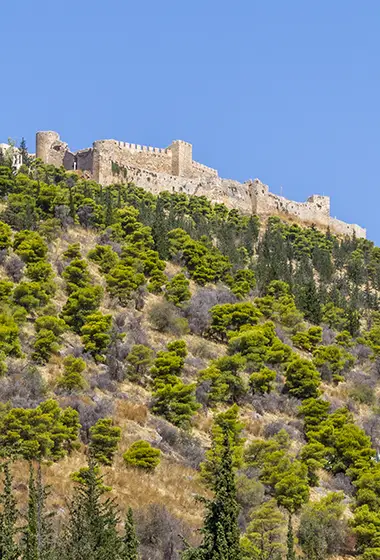
Situated close to Nafplio and the historic Tiryntha, Argos is the largest city in the Argolida Prefecture, with a population of over 24.500. It is a contemporary metropolis with strong economic, industrial, and agricultural activity that is expanding in many areas. It is one among Greece's oldest cities, with centuries of history. The earliest evidence of inhabitrants in the region has been dated back to the third millennium BC. The city was founded and ruled by the mythical hero Inachos, also the name of a river in the area. He introduced the art of vitrification, cloth making and agriculture. Argos had tremendous prosperity under his rule, and the locals dubbed the entire Peloponnese region the "land of Inachos." The city was represented by Diomedes in the Trojan War, according to Homer's epics. The significance of the city in Greek customs and mythology is demonstrated by the fact that the Greeks are also referred to as Achaeans (Αχαιοί) or Argeioi (Αργείοι). Mythology claims that many of the ancient Greek kings were descended from the Argeioi, or Argos residents. Up until the first part of the 7th century BC, when Athens and primarily Sparta challenged its dominance, the city would play a major role in Peloponnese and Greece. At that point, the regime of Argos was moving toward a democratic path, which was the cause of perpetual conflict with the oligarchic Sparta. The Spartans will won over the Argeioi twice after the first half of the sixth century BC, and the city began to decline. In order to avoid forming an alliance with Sparta, Argos abstained from the Persian wars. Mycenae, Tiryntha, and Nafplio join its sphere of influence in 468 BC. Argos participates in the Peloponnesian War as an ally of Athens. Argos develops once more after the Romans seize it in 146 BC. An notable date is 1345 AD, when the Venetians captured the city and the Turks stormed it shortly after. In the years that follow, Argos's population declines and the city had lost is former glory. The city later on becomes the focal point of the Greek War of Independence against Turkish domination. On March 23, 1821, Argos raised the flag of revolution after being incensed by Stamatelos Antonopoulos. Argos progressively regained its status as the region's commercial, industrial, and cultural hub as the 19th century drew to a close.